




Planning a safari tour is an exciting adventure, but one of the crucial decisions you'll need to make is choosing the right backpack. As a backpack supplier, I've seen firsthand the importance of having the perfect pack for a safari. In this blog, I'll share insights on what kind of backpack is suitable for a safari tour, so you can focus on enjoying your wildlife encounter without any hassle.
Capacity Matters
First off, let's talk about capacity. A safari often involves carrying a variety of items, from water bottles and snacks to camera gear and extra clothing. You'll want a backpack with enough room to hold all your essentials but not so large that it becomes cumbersome.
For a day safari, a backpack with a capacity of around 20 - 30 liters should do the trick. This size can comfortably fit a water bladder, a light lunch, your camera, binoculars, and a light jacket. If you're going on a multi - day safari, you'll need something bigger, like a 40 - 60 liter backpack. This extra space will allow you to pack camping gear, more clothing, and other necessities for an extended trip.


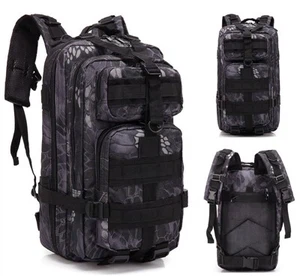
Our Water Proof 45L Army Tactucal Backpack is a great option for multi - day safaris. It's large enough to hold all your essentials and is also water - proof, which is essential in case of unexpected rain or river crossings.
Comfort and Fit
Comfort is key when you're going to be carrying a backpack for long periods. Look for a backpack with padded shoulder straps and a hip belt. The shoulder straps distribute the weight evenly across your shoulders, while the hip belt transfers some of the weight to your hips, reducing the strain on your back.
Adjustable straps are also a plus. Everyone's body is different, so being able to adjust the straps to fit your body shape and size ensures a more comfortable fit. Some backpacks even come with adjustable torso lengths, which is great for people of different heights.
In addition to the straps, the back panel of the backpack should be well - ventilated. Safaris can be hot, and a ventilated back panel will help keep you cool and prevent sweating.
Durability
A safari is a rugged adventure, so your backpack needs to be tough enough to withstand the elements. Look for backpacks made from high - quality, durable materials like nylon or polyester. These materials are resistant to tears, abrasions, and water.
The zippers and buckles on the backpack should also be of good quality. Cheap zippers can break easily, leaving you with a backpack that won't close properly. Metal buckles are generally more durable than plastic ones.
Organization
Organization is another important factor. You'll want to be able to find your items quickly and easily. A backpack with multiple compartments and pockets is ideal. For example, a dedicated compartment for your camera and lenses will keep them safe and protected, while smaller pockets can be used for items like keys, phone, and chargers.
Our Portable Toiletry Bag can be a great addition to your safari backpack. It's designed to keep your toiletries organized and easily accessible.
Special Features
Some backpacks come with special features that can be useful on a safari. For example, a built - in rain cover is a great feature, as it can protect your backpack and its contents from sudden downpours. A hydration bladder sleeve is also handy, as it allows you to carry a water bladder and drink water on the go without having to stop and dig out a water bottle.
If you're planning to do some hiking during your safari, a backpack with attachment points for trekking poles can be very useful. You can attach your poles to the outside of the backpack when you're not using them.
Style and Aesthetics
While functionality is the most important factor, style also matters to some extent. You'll be carrying your backpack around for a long time, so you might as well choose one that you like the look of. There are backpacks available in a variety of colors and styles, from sleek and modern to more rugged and outdoorsy.
Our Labubu Cartoon Canvas Tote Bag is a fun and stylish option. It's not just a regular tote bag; it can also be used as a daypack for short excursions during your safari.
Conclusion
Choosing the right backpack for a safari tour is a combination of considering capacity, comfort, durability, organization, special features, and style. As a backpack supplier, we have a wide range of backpacks to suit different needs and preferences. Whether you're going on a day safari or a multi - day adventure, we've got you covered.
If you're interested in our backpacks or have any questions about which one is right for your safari, feel free to reach out to us for a procurement discussion. We're here to help you find the perfect backpack for your next big adventure.
References
- Outdoor Gear Lab: Backpack Reviews
- Backpacker Magazine: Guide to Choosing the Right Backpack


